

STONE ISLAND SOUND Episode_003_Joao Pedro
An essay attempting to explain why Brazilian music is so energetic and vibrant.


Brazil has always been described as a country of rhythm, energetic, with a unique vibration and not only in music, but this definition simplifies the process too much. What drives this subjective experience is a long history of racial mixture, tension and creativity that spans centuries. From the forbidden drumming of the colonial period, which originated or adapted capoeira not only as a form of fighting and protection but also as a dance and essentially a musical style, to funk, there is a line of energy that remains, a kind of collective impulse that transforms social construction into sound representation.
The most curious aspect of this line is that there is no physical example to be given, nothing measurable in a concrete sense. It cannot be quantified by technique, and it is not explained by music theory. To understand what a Brazilian carnival is, a person needs to go to Salvador and join one of the street “blocos”. Funk from São Paulo resonates differently on a street in Paraisópolis. Outside of that context, in headphones or the speakers of a concert venue, what you hear is only an attempt to replicate and expand the culture and the sense of belonging from that territory.
The music itself carries a unique energy, but the symbolism, the feeling of belonging to that place for a few hours, generates an energy that moves through the air and through every street where that musical and social style is present, and can only be felt.
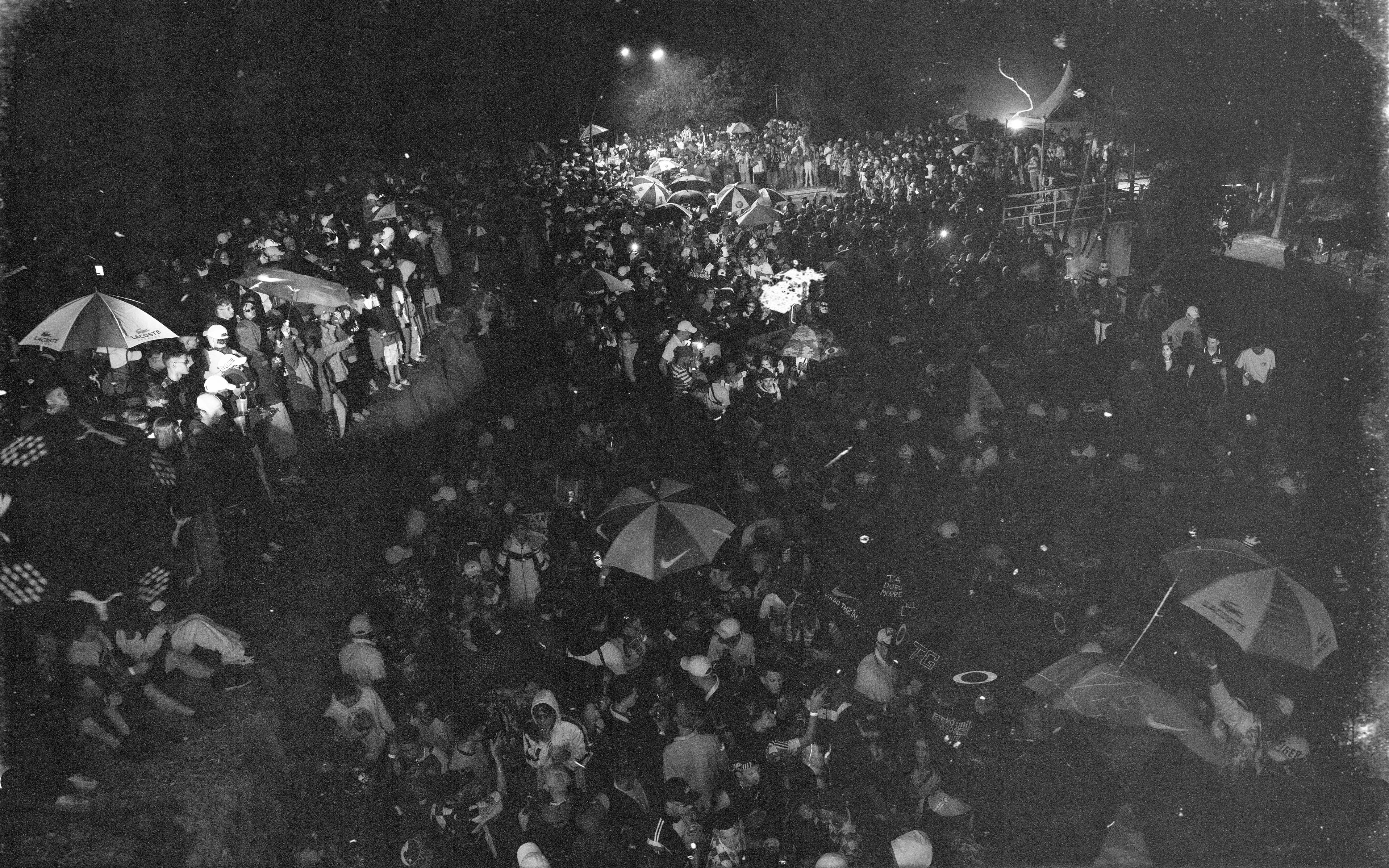
This subjective dimension, which is only perceived within the context where it is born, shows that the strength of Brazilian music does not come only from its composition, but from the way it organizes sociability and produces belonging. The vibration that is identified as Brazilian is the result of concrete interactions between body, space and history. There is no way to isolate it from its environment.
To understand it, it is necessary to go back to the beginning and trace where this impulse that structures the country’s culture originates. We look here for the starting point of this impulse that moves Brazilian culture.
When you ask why Brazilian music vibrates this way, the path leads from African heritage to samba circles, the musical formation based on skin instruments, the syncopated experiments of Jorge Ben, Djavan and the generation of the 60s and 70s, the black dances, the repression of the dictatorship, and the favelas that reinvented Miami Bass in the 90s. The Brazilian aesthetic, the so-called “Brazilian Core” that is sold worldwide, is translated in this moment as something real, shaped by a country that went through its own transformations and expressed itself through rhythm as the world changed around it.
What is called Brazilian energy in music is the historical expression of a territory that never functioned as a homogeneous nation but as a forced coexistence between incompatible cultural matrices that found different ways to coexist but primarily through rhythm. The foundation takes shape before the idea of Brazil, in the encounter between Indigenous traditions, European harmonic structures and African rhythms marked by violence, forced displacement and community reconstruction.
The country formed its musical structures in response to its social and political development, and this response took sonic form because rhythm was always a language accessible to those who had no access to formal cultural production circuits.
To understand the general structure, the social formation of Brazil is equivalent to that of a continent. Entire regions developed under different logics. The South received Italian and German influence and developed specific harmonic traditions, the Northeast preserved Indigenous and African structures that survived even after centuries of repression, the North maintained Amazonian cultural complexities and influences from nearby countries that shaped local chants and rhythms. Each region was formed by distinct histories, and the music that emerges in these spaces is just as dissimilar. There is a constellation of regional energies that converge in a few central elements, which are later recognized as the unmistakable vibration of Brazilian music.
It should be clear that even with such different origins, each of these nuclei feeds off the others, and that is where the subjective line of energy lives.
The emergence of samba at the end of the nineteenth century and beginning of the twentieth marks the first major moment when this energy presents itself as a consolidated language. It unfolds from the Bahian samba de roda but takes urban shape in Rio de Janeiro, where the Black community organizes drumming, jongo, lundu and “partido alto” circles as spaces of resistance. Samba is born from the need of the Black community to assert cultural presence in a country that criminalized its practices.
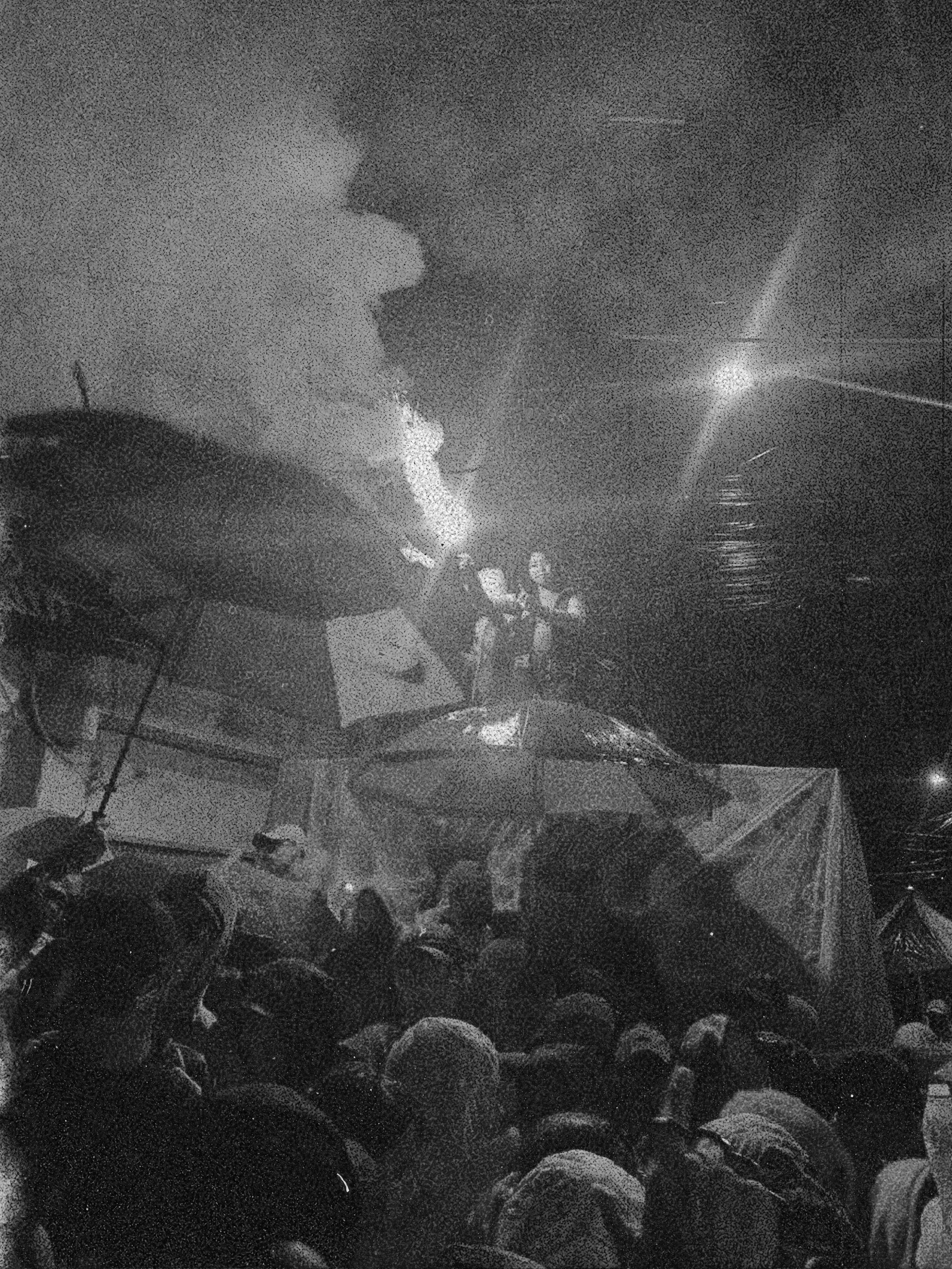
Beyond the instruments rooted in an orchestra of strings and skin instruments, meaning those built with stretched leather or synthetic membranes, samba is also created and shaped by a unique component in this entire history, the people. The rhythmic base comes from the collective, beyond the samba circle, through the clapping of the audience and the circular formation itself that creates an ecosystem and an atmosphere for the sound to resonate correctly and be reproduced as the ancestors created it. The circles were born in backyards, terreiros, houses of newly settled Black families in Rio after abolition, and were structured by a community logic.
The voice and lyrics function as a narrative of daily life, a format of social commentary and identity affirmation. The creation and evolution of samba contributed heavily to this energy. The sound is a direct result of the ancestry present throughout Brazil, as if something resurfaced every time samba is played.
Moving forward in time, we need to talk about Cacique de Ramos, which from the 1970s onward became one of the most important spaces for understanding how samba evolved within a community logic. The circles held in the Rio suburbs, more specifically in the Cacique court in the Olaria neighborhood of Rio de Janeiro, functioned as meeting points for composers, percussionists and young musicians who circulated between neighboring districts. The most well known rule was simple and defined the entire dynamic of the place: only original songs were allowed. This forced every participant to create new material and transform daily life into direct narrative. The themes came from conversations, family problems, work relations, bus commutes and local conflicts. For many musicians, the circle worked as a therapeutic exercise because singing there was a way to organize experiences that had no space elsewhere. Much of the generation later known as Fundo de Quintal was formed in this circuit. Cacique de Ramos solidified samba as a direct expression of suburban life, creating a network that would influence Brazilian music for decades. From here, we can understand other moments of Brazilian musicality.
When Brazil enters the 1960s under military dictatorship, music becomes a space of symbolic and political dispute. At the same time, the period produces one of the greatest surges of creativity in the country’s history.
What exactly was the Brazilian military dictatorship, and what were its impacts on music and culture?
To understand what the Brazilian military dictatorship was and its impact on music and culture, it is necessary to understand that the 1964 coup did not happen suddenly. Speaking only about the cultural side without properly addressing the context would obscure how something that lasted almost twenty years took shape. The coup developed over the previous years when the country entered a cycle of political tension around the basic reforms defended by João Goulart. Land redistribution, regulation of foreign capital and strengthening unions created conflict between government, economic elites, parts of the military and the United States during the Cold War. The resignation of President Jânio Quadros in 1961, followed by military resistance to Goulart’s inauguration, already showed the instability of that decade. When the military took power on March 31, 1964, the process was legitimized by anticommunist rhetoric and logistical support from the United States through Operation Brother Sam, which offered fuel, weapons and vessels in case of internal conflict, a process seen in many countries worldwide.
After taking power, the new regime reorganized the country with Institutional Acts that suspended political rights and built a surveillance machine. These acts, known as AI, were decrees issued by the military governments between 1964 and 1969 and stood above the Constitution.
AI 1 allowed the removal of anyone considered an opponent, AI 2 extinguished political parties, and AI 5 in 1968 inaugurated the harshest period of the regime, known as the coup within the coup. It gave the president nearly absolute powers with prior censorship, congressional shutdown, institutionalized torture and direct control over newspapers, TV, radio and publishing houses. Artists, journalists, professors and students became targets. Many MPB artists who already challenged the regime through metaphorical lyrics were forced into exile, like Caetano Veloso, Gilberto Gil, Chico Buarque and even architect Oscar Niemeyer. Student movements were repressed, labor unions monitored and any cultural manifestation addressing social themes was filtered by censorship agencies.
Repression in a certain way accelerated experimentation in Brazilian musicality. It is also true that foreign music was widely consumed during this period, which expanded the horizons of those producing music. Mixture stopped being a characteristic and became a deliberate tool where Brazil absorbed electric guitars, psychedelic rock, modal jazz,Northeastern rhythms, traditional samba and African Atlantic influences and transformed everything into something that did not reproduce foreign models.
The energy of this period emerges from political tension and artistic invention simultaneously. Living under a dictatorship should not have been the perfect moment for inspiration or sonic experimentation, especially when repression targeted intellectuals, subcultures and Black and peripheral cultural expressions. But we can extract an important question from this moment. The relationship between the regime and musical production created a paradox. At the same time that repression intensified, the period also saw the flourishing and professionalization of the Brazilian cultural industry. All attempts to suppress art gave musicians a new kind of social power. Creating an album, a record, a song became equivalent to painting on a blank canvas that would be inspected by authorities and embraced by the public.
This is the context that gives rise to the creative force of Tropicália, the political weight of MPB and the consolidation of Brazilian music as a field of symbolic resistance.
The imprisonment and exile of Caetano Veloso and Gilberto Gil in 1969 marks a turning point. Brazil loses two of its key aesthetic figures, but the impact is not only cultural. Exile exposes them to new sounds, scenes and production methods that they bring back to Brazil, blending them with local logic and altering musical directions for decades.
When Tropicália emerges, discussions often focus on aesthetics and influences, but the material dimension is just as important. Caetano, Gil, Os Mutantes and Tom Zé begin working in studio environments where producers, arrangers and technicians played central roles. The presence of Rogério Duprat as conductor and arranger created a recording structure that combined orchestra and electric instruments, something that depended on the physical structure of the music industry of that time. Experimentation did not happen only in composition but also through equipment, mixing boards, microphones and recording techniques that manipulated timbres. The movement’s manifesto album, Tropicália ou Panis et Circencis, brought together several artists and consolidated their ideas, becoming a fundamental work, more important than individual performances in terms of historical record and long-term influence. It is also necessary to mention Chico Buarque’s show Alegria Alegria, which set the rhythm for the movement and mobilized a youth guided by anti dictatorship sentiment.
Jorge Ben emerges as one of the central figures of this transformation. His relationship with the guitar as a percussive instrument, played in a way that had not been seen before, brought together samba, rock, bossa nova, funk, jazz and African and Arab rhythms in a logic where harmony and rhythm intertwined and the rhythmic base guided the narrative. Jorge Ben is a perfect example of a blessed generation and a clear representation of the energy and atmosphere that only Brazil possesses.
Before becoming a central figure in Brazilian music, he circulated within a very specific circuit in Rio de Janeiro. He frequented clubs like Little Club and Bottle’s, both inside Beco das Garrafas, a set of tiny bars in Copacabana where musicians, arrangers and curious audiences met almost daily. The audience consisted of studio musicians, bohemian regulars, foreign musicians passing through Rio and young people interested in the jazz that was becoming popular. Musicians often swapped instruments between performances, creating adaily environment of experimentation. In that space, Jorge Ben, with his percussive guitar and repertoire that mixed samba and rhythm and blues, connected with drummers, bassists and pianists who moved between dance halls and studios. This shaped his performance because rhythm there needed to be direct, firm and functional for the environment.
One of Jorge’s most distinctive and energetic characteristics was his use of syncopation, the rhythmic displacement that emphasizes weak beats or offbeats instead of expected strong beats, creating a sense of surprise or being out of time. It is difficult to quantify how much his influence shaped later productions, but it is undeniable that he stands as a prime example of Brazilian rhythmic energy.
Djavan developed another path, more harmonic but equally built on rhythmic sensibility influenced by the African diaspora. Before moving to Rio, he built his musical identity in Maceió, in an environment of limited circulation but great cultural diversity. He sang at local festivals, small dances, radio programs and bars where the repertoire included Northeastern regional music, bolero, imported jazz and first generation MPB. This forced musicians to know wide repertoires and adapt to different instrument formations at each performance. When he moved to Rio, he brought this rhythmic vocabulary but came into contact with professional musicians, arrangers and a studio structure that did not exist in the Northeast at that time. The fusion between Maceió’s empirical learning and Rio’s technical resources became the basis of his musical identity marked by complex harmonic resolution, melodic syncopation and the use of voice as an instrument.
His way of resolving chords, using melodic syncopation and fluid vocal lines shows that Brazil understands music as movement, not rigidity.
Another example is Trio Mocotó, formed through the practice of accompanying Jorge Ben and other artists in venues where maintaining groove for long periods was essential, keeping the dance floor active and integrating influences already circulating in big city clubs. Samba rock is born in this hybrid environment, as a direct response to an audience that wanted to dance rather than from any preconceived concept. The trio’s technique, especially through congas and pandeiro, created a balance that shaped later pop and dance music in Brazil.
Meanwhile, black dance parties in Rio and São Paulo introduced James Brown, funk, soul and disco to an effervescent youth experiencing rapid urban growth and increasing social inequality.
These events took place in clubs, sports courts, warehouses and community halls. The audience included those who went to dance, those who watched choreographies and those who saw the scene as an important space of sociability. Police treated these events with suspicion, repression operations were frequent and the sound crews were monitored as part of a broader policy targeting Black bodies and peripheral territories. Even so, these parties became the central meeting point for urban Black youth, shaping fashion, behavior, dance and a network that directly influenced the rise of Brazilian funk.
Tim Maia and Banda Black Rio absorbed and translated these influences into the local logic. Foreign influence went through the Brazilian filter, and what arrived as African American music became a hybrid of funk, soul and Brazilian rhythm. This process highlights a fundamental trait of Brazilian music. Nothing enters the country and comes out the same.Everything that is imported is reconfigured by the social environment and by how Brazilian bodies understand rhythm.
The funk that emerges on Rio’s beaches and in the Baixada Santista expands this logic to a new level, forming the base of what today translates Brazilian identity.
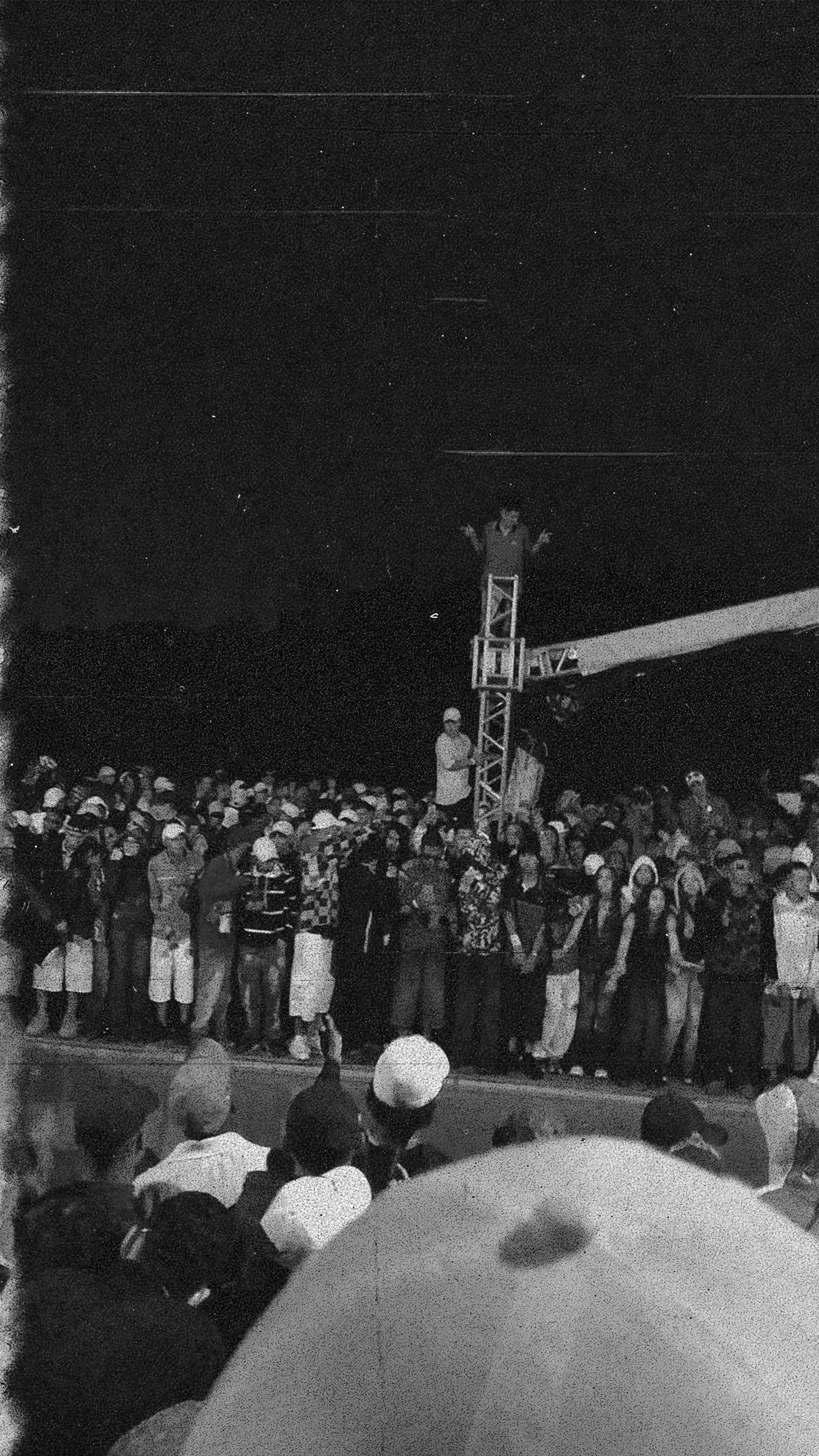
Derived from Miami Bass but recreated by the reality of the favelas, funk incorporates aggressive electronic beats, rhythmic repetition and direct vocals. The rhythm is born from social urgency, homemade production, lack of formal equipment, favela dance parties divided between the A side and B side of the community, and the need for a sound that would become the new reason for a generation to take the streets and feel represented. Like samba, funk was created directly from the community, even if often judged socially and dismissed as a subculture. This devaluation has never diminished funk’s value or presence in Brazil.
Funk is the clearest living proof of this energy and the best answer to anyone asking about this unique vibration.
Funk was one of the first genres I listened to. I grew up in a very musical family, with my parents always showing me new songs, along with my uncles and cousins. But I remember the moment I discovered what funk was. It was around 2010, I was only six years old, and in a time before smartphones, going outside to play soccer was my entertainment, and that is where I heard that kind of sound, with addictive beats completely different from what was common at the time.
What I did not understand then was how that sound complemented the environment. I grew up in Mauá, São Paulo, a city shadowed by factories and peripheral in identity. That marginalized sound, the one my mother forbade me to listen to, felt like a reflection and perfect soundtrack for so many moments of my childhood, adolescence and current life.
The songs of MC Daleste, Dimenor DR, MC Nego Blue, Rodolfinho and MC Lon exposed a reality I would come to understand years later, the relationship between material goods, life standards, consumption and the complexities of growing up in the periphery of São Paulo.
Listening to funk around 2012 was like declaring you were not a good citizen or would never become one, and seeing it become globally recognized today is gratifying. Today, all my friends share the same story, each with their favorite MC, their phase of listening to funk, but something is undeniable.
The genre was capable of accompanying our generation’s growth in a transformative way. In dance parties, bars, house parties or any gathering, the energy that funk can transmit can only be fully felt here, close to its origin.
Today, it is possible to find many distinct types of funk across the entire country, in sounds similar to the brega of Recife and not only in genres but also in levels of production. In the same landscape where major producers dedicate their studios to the genre, there are also teenagers who launched successful careers with tracks made entirely on their phones. This is the clearest relationship to the fundamental question of why there is so much energy in this music.
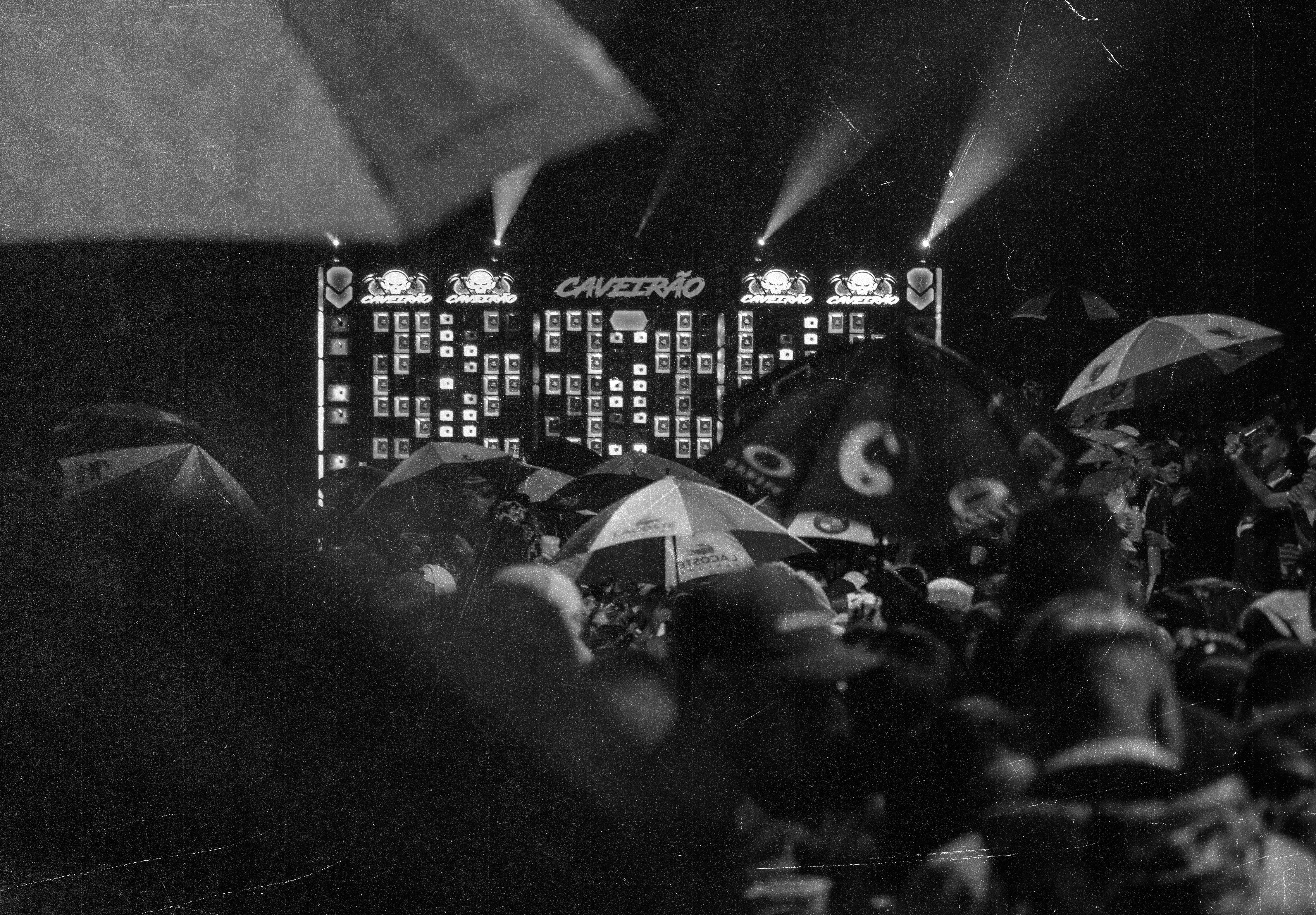
When we discuss Brazilian energy, we discuss a continuous historical process, not a fixed aesthetic attribute. It is the accumulated result of hundreds of years of African matrix reinventing itself in hostile territory, Indigenous matrix surviving despite violence, European matrix being dismantled and reconstructed, political repression fueling creativity and urban dynamics generating new sounds every decade.
Brazilian energy is born from the conflict between all of this. It is the final product of a mixture that was never controlled, never planned and never homogeneous. What is most interesting is that it can only be felt, not touched or measured, only experienced.
Therefore, Brazilian energy cannot be explained. It is observed in the functioning of rhythm as memory. It is felt in the collision between tradition and modernity. And it is confirmed in the country’s ability to transform everything it touches into a language of its own. That is why it remains one of the most unique cultural expressions in the world.
Terra próspera, rima rica, energia única. Esse é o verdadeiro orgulho verde e amarelo antes da subversão da podridão de você-sabe-quem; Obrigado!
Wow, the part about the energy not being measurable, only felt, is so insightful. Does this quality apply to other deep cultural expressions, you think? Such a brilliant analisys!